

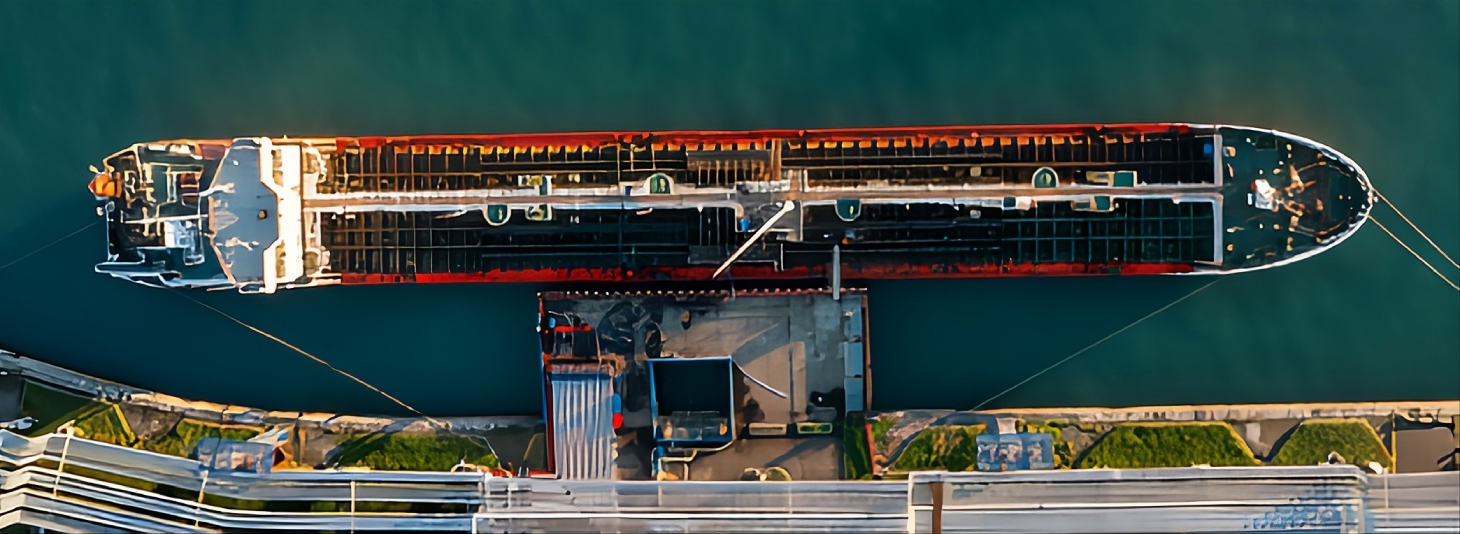
When I first learned about Just-in-Time (JIT) arrivals, I saw it as a port initiative. The discussions involved berth windows, pilot availability, crane scheduling, and reducing congestion. It seemed like a concept to be managed through mutual coordination among terminals, port authorities, and charterers. Our role, I believed, was simply to deliver the vessel safely at the agreed time.
Experience has taught me otherwise.
Preparing a vessel for a port call starts days before arrival. Emails and calls pour in from all directions. Would the vessel maintain its ETA? Was there any change in speed? How will the weather affect arrival? Did anything happen onboard that could alter the schedule?
The answers influence decisions ashore, many of which are already planned around the vessel’s expected arrival (ETA).
A revised ETA, then, impacts berth planning, tug availability, crane scheduling, and pre-committed terminal resources. A seemingly minor change in the vessel's progress could ripple through the entire chain, requiring plans ashore to be adjusted and resources to be held, dismissed, or reassigned, often at high cost.
That was when I realised that for JIT arrivals, what is needed is accurate, real-time ETA tracking: location, speed, fuel burn rate, and other continually changing parameters.
One ETA. Dozens of Decisions.
ETA is the starting point of all critical activities that are organised before a ship reaches the berth. The assumption is that once we calculate the ETA, the rest is simply a matter of keeping everyone informed.
The truth, however, is that ETA is only a prediction. Like any other prediction, the chances of it happening as planned depend on knowledge of events faced by a vessel in real-time.
Every voyage adds variables that cannot be fixed at departure. Weather and sea conditions change. Traffic separation schemes become more congested than expected. Charterers may revise instructions under a time charter. A port can request a different arrival window to accommodate changing berth availability. And all these developments are part of normal trading.
The challenge is that every adjustment modifies the vessel’s expected arrival – this might range from a few minutes to several hours. Viewed individually, these changes appear insignificant. Together, they widen the gap between the voyage the shore team believes the vessel is sailing, and the voyage the vessel is actually experiencing.
When the Vessel Moves but the Information Goes Nowhere
Most ships don’t sail for over 12 hours without something changing.
Whenever traffic separation schemes become busier, weather changes, or a stronger current alters a vessel’s progress, speed is adjusted to manage fuel consumption or align with a revised arrival window. The engine works under a different load and bridge teams have to change navigational decisions for safe and efficient voyages.
While adjustments are not uncommon, the difficulty is that they happen between reporting intervals. By the time a scheduled report reaches the shore team, the vessel sails to a different plan than the one everyone had been working from. The assumptions behind the original estimate no longer hold true. The information available to port and shore teams remains largely static till the next report arrives.
Neither the shore teams nor the crew managing the vessel can predict every change on the sea. What matters, though, is recognising those changes early enough to respond efficiently. The closer the information reflects the vessel’s actual progress, the fewer assumptions will be made, and the easier it becomes to keep the entire port aligned.
What JIT Demands
Working with JIT port calls, I realised we had been focusing more on the outcome—the arrival time—when the real value lies in everything that shaped it.
Shore teams need a reliable picture of how the voyage is evolving between departure and arrival. Only then can their decisions on berth readiness, pilot boarding, tug allocation, crane scheduling, and cargo operations keep pace with realities on the sea.
The picture is created by the continuously changing information throughout a passage. Speed differs from the planned profile because of weather or traffic. Main engine load varies whenever conditions change. Shaft power shows the amount of energy being used to sustain progress. Trim adjustments affect fuel burn and vessel efficiency. Together, these factors determine whether the original ETA is achievable and whether, and why, the port call needs to be adjusted before deviations turn into bigger scheduling problems.
High-frequency data (HFD) makes a practical difference in enabling JIT arrivals. It provides what scheduled reports miss. Shore teams get to work with information that evolves along with the vessel’s progress. They can recognise deviations when there is time to adjust berth planning, pilot schedules, or terminal resources. ETAs based on near real-time sailing conditions make their calculations more relevant.
With HFD, speed profiles and machinery performance are interpreted contextually, allowing commercial, technical, and port-facing teams to respond to changing circumstances with greater confidence.
For me, that is what JIT ultimately demands from the vessel side. Not higher speeds or tighter schedules, but a continuous flow of reliable information that allows us to plan around the voyage as it exists today.
The closer everyone works from the same, up-to-date operational picture, the easier it is to synchronise the activities that turn an arrival into an efficient port call.
The Cost of Waiting Was Never Just Time
A big change in my own thinking was understanding how the success of a port call is defined by the way everyone involved was able to prepare for the arrival.
In an age when shipping will adopt more just-in-time operations, the focus has moved from reacting to delays to the conditions that create those delays. Better synchronisation benefits everyone in a voyage —from the vessel and terminal to pilots, tug operators, cargo interests, and charterers. In addition to fuel savings and lower emissions, the rewards are fewer disruptions, more predictable schedules, and better use of port resources.
A day at anchor is not just 24 hours. It carries forward into the next berth window, lost vessel-utilisation, delayed cargo operations, schedule reliability, and the next commercial commitment.
So now when I think about the ETAs that did not happen as planned, I don’t ask whether we could have made the ship sail faster. The right question is: what did that preventable day at anchor cost—and how much could have been avoided with access to real-time voyage data?























.png)























Sign up to our monthly newsletter where we will share insights, invites to exclusive webinars and other events.


