

By :
|

Key MARPOL Amendments in 2025 and What They Mean for Ship Operators
2025 was a landmark year for environmental regulation in shipping as new MARPOL amendments came into force. These updates to the International Convention for the Prevention of Pollution from Ships influence how vessels are fuelled, their data reporting, route planning, and fleet efficiency.
The compliance bar for ship operators has clearly risen with these changes. Whether they manage a small coastal fleet or deep-sea tonnage, crews must understand what is changing and how it affects their day-to-day operations, costs, and long-term competitiveness.
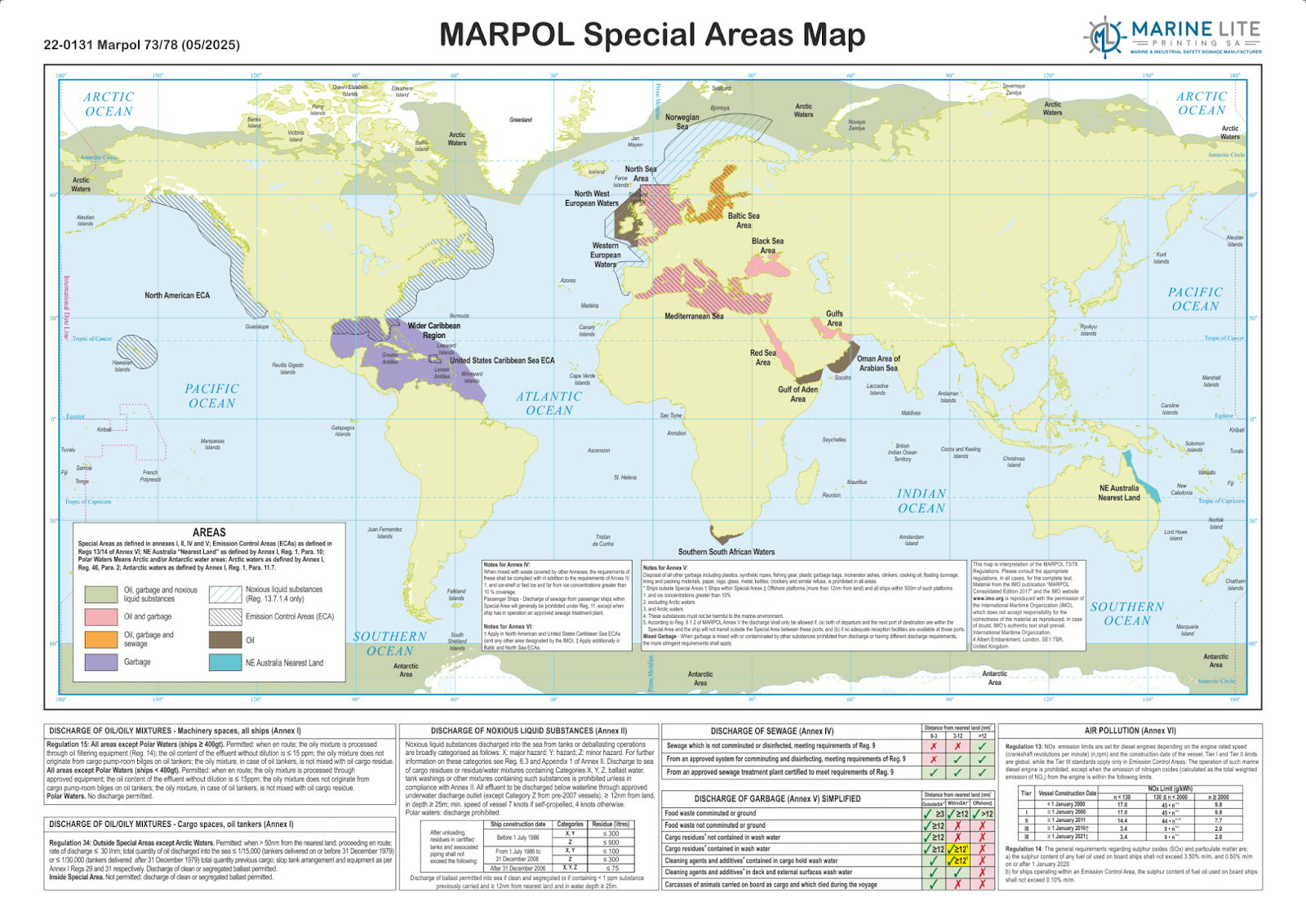
Source: MarineLite Printing SA Recollecting Previous Changes: A Five-Year MEPC Snapshot
Over the past five years, the IMO Marine Environment Protection Committee (MEPC) has progressively tightened the regulatory framework, as seen in the snapshot below:
MEPC Session
Key Regulatory Focus
What Changed
Operational Impact for Ship Operators
MEPC 75–78 (2020–2022)
Foundation for GHG & Efficiency Measures
Advanced GHG reduction discussions; strengthened DCS; refined EEXI/CII guidelines.
Start preparing for tighter efficiency baselines, more accurate reporting, and early compliance planning.
MEPC 79–80 (2022–2023)
Acceleration of Decarbonisation Roadmap
Improved CO₂ reporting accuracy; expanded guidance on low-flashpoint fuels & alternative fuels; alignment with new-energy technologies.
Need for accurate emissions data, consideration of dual-fuel/alternative-fuel readiness, and integration of new reporting protocols.
MEPC 81 (2024)
Implementation & Enforcement
Enhanced fuel-oil sampling rules; additional flashpoint safety provisions; introduction of Mediterranean SOx ECA.
Adjust bunkering/handling procedures; ensure flashpoint compliance; prepare for SOx ECA operations & provisioning needs.
MEPC 82–83 & MEPC 2nd Extraordinary Session (2025)
Finalisation of 2025 Amendments
Clarified DCS transport-work reporting; new documentation requirements for fuel safety; completion of 2025 rule package.
Immediate operational adjustments in reporting, documentation, monitoring, and verification workflows—direct lead-in to MARPOL 2025 readiness.
Key MARPOL Amendments in 2025
The amendments adopted at the 81st session of the MEPC came into effect on 1st August 2025, and they include:
1. Stricter Energy Efficiency & Carbon Intensity Measures (Annex VI)
2. Obligations under the Data Collection System (DCS)
3. NOx Tier III Phase-In for More Sea Areas
4. New Emission Control Areas (SOx/NOx/ECA expansions)
5. Rules for Low-Flashpoint Fuels
6. Stronger MARPOL Annex I & II Pollution-Prevention Rules
7. Mandatory Digitalisation of Logs & Certificates (Progressive Rollout)
8. Garbage, Sewage & Anti-Fouling Rules (Annexes IV, V & VI links)
An Overview of the Key MARPOL Amendments in 2025
Regulatory Area
What Changed
Practical Impact for Vessels
1. Energy Efficiency & CII (Annex VI)
• Narrower CII rating bands
• Higher expectations for maintaining/improving EEXI performance
• More vessels risk falling into D/E ratings
• Need for deeper efficiency gains via retrofits, EPL tuning, hull/propeller upgrades, and lower-carbon fuels
2. Data Collection System (DCS)
• More granular fuel and voyage data required
• DCS aligned tightly with CII reporting
• Stricter data-validation processes
• Zero tolerance for inconsistencies between voyage, cargo, and emissions data
3. Expanded NOx Tier III Requirements
• Newly designated NOx control areas effective for post-2025 newbuilds
• Tier III engines or SCR/EGR systems required for vessels entering new ECAs
• Route planning must consider ECA exposure
4. New SOx/NOx Emission Control Areas (ECAs)
• More ECAs activated globally
• Standardised fuel-switching and changeover rules
• Precise fuel-switch timing, clean tanks, compatibility checks
• Higher fuel quality and segregation discipline
5. Low-Flashpoint Fuels Rules
• New safety requirements for methanol, ammonia, and alternative fuels under IGF updates
• Double-walled lines, enhanced ventilation, leak detection, ESD systems
• Crew certification and competency upgrades
6. Annex I & II Pollution-Prevention Upgrades
• Stricter limits for tank-cleaning residues and washwater
• More detailed ORB/cargo documentation
• More precise timestamps and sequencing in ORB
• Greater compliance burden for chemical/product tankers
7. Digitalisation of Logs & Certificates
• Mandatory transition to ERBs for key logs
• Requirements for tamper-evident digital audit trails
• Need for digital log systems, secure access controls, and automated timestamps
• Easier PSC inspections but zero scope for manual ambiguity
8. Garbage, Sewage & Anti-Fouling Updates
• Tighter discharge limits in Arctic/SPA zones
• Expanded reporting for anti-fouling systems
• Stricter garbage segregation and sewage handling
• Updated declarations and proof of compliant coatings/cleaning
What These Amendments Mean for Ship Operators
The MARPOL amendments enforced in 2025 move ship companies towards tightened reporting discipline, cleaner energy paths, and more transparent operations. The extended DCS mandates require operators to maintain lucid datasets, rigorously validate voyage details, and remain ready for a future in which records may only be submitted digitally.
As energy efficiency measures become more stringent, ships operating close to EEXI or CII thresholds will need to refine their operational techniques for speed optimisation and better trim management, using energy-saving devices or targeted retrofits. Operators of multi-fuel vessels must be prepared to implement stricter documentation, testing, and on-board handling procedures for the use of low-flashpoint fuels.
More explicit Annex V rules imply closer scrutiny of garbage segregation. While the widened acceptance of ERBs will reduce administrative burden, it also calls for better audit trails during Port State Control inspections. Updated OWS, sewage, anti-fouling, and SOPEP/SMPEP standards stipulate early planning for shipyard visits and equipment upgrades.
By widening the gap between “basic compliance” and “operational excellence”, the 2025 changes reward operators who are data-aware, organised, and proactive at optimising their routine processes.
Overview: Implications for Ship Owners
Impact Area
Operational Expectations
Required Operator Actions
Reporting & Data Discipline
More granular DCS input, direct alignment with CII, and digital logs
• Strengthen data QA processes
• Maintain validated voyage & cargo datasets
• Prepare for fully digital submissions
Energy Efficiency & Performance
Stricter CII/EEXI thresholds push vessels closer to non-compliance
• Optimise speed/trim
• Deploy energy-saving devices
• Evaluate retrofits or fuel switching
Fuel Management
Multiple fuel types + low-flashpoint fuels require tighter control
• Document fuel testing & handling procedures
• Train crew in IGF Code competencies
• Maintain strict segregation routines
Environmental Compliance
Stronger rules across garbage, sewage, tank cleaning, and anti-fouling
• Reinforce Annex V segregation practices
• Plan for equipment upgrades during yard visits
Port State Control Readiness
ERBs improve clarity but eliminate flexibility in manual entries
• Ensure audit trails, access control, and tamper-proof logs
• Train crew in digital logs
Strategic Operations
Gap widens between basic compliance and high-performance operators
• Adopt proactive planning
• Standardise documentation
• Use data insights to reduce risk and cost
Preparing Your Fleet for the New Normal
The maritime industry has entered an era of operational accountability, where accurate reporting and consistent vessel efficiency require systems that record, validate, and interpret performance in real time.
Operators must exercise more control over their equipment performance and voyage efficiency to comply with the 2025 MARPOL amendments. They have to ensure reliable data capture across fuel flow, engine load, emissions, and voyage variables.
Sensors, flowmeters, and onboard systems must be calibrated, harmonised, and capable of supporting DCS–CII alignment. Ships also benefit from stronger condition monitoring, as early anomaly detection prevents failures that put compliance at risk and cause costly downtime.
Keeping a close watch on developments in the marine world, Smart Ship© Hub provides the digital solutions that owners and operators need to maximise the ROI from their vessels. Our machinery condition-monitoring platform channels high-frequency data streams from IoT sensors and multiplexers to provide a realistic view of vessel performance. Automated harmonisation by the Vessel Reporting System prevents the errors that will now be exposed under DCS/CII convergence.
Using SSH Remote’s high-frequency data capture, predictive diagnostics, reliable reporting workflows, VHI-supported insights, and anomaly alerts, operators can maintain EEXI/CII performance curves, identify efficiency drift, and plan maintenance around regulatory obligations.
Keeping up with the new changes also requires sharper crew awareness. Ship and shore teams must be trained to interpret efficiency KPIs, understand alert categories, and act on predictive insights.
To explore how Smart Ship© Hub helps you achieve continuous compliance and operational efficiency, connect with our team for an advisory discussion or pilot deployment.




























.png)





























Sign up to our monthly newsletter where we will share insights, invites to exclusive webinars and other events.


