

By :
|

An interesting thing I learnt through my years at sea is that what you don’t see can hurt you more than what you do. There was a time when a ship’s story lived in its silences – the breaks between consecutive noon reports, the assumptions made about weather, the unwritten judgment calls we carried in our minds. Those gaps were our blind spots, but we accepted them as part of seafaring.
Today, when I look at the bridge, I see a different reality. Modern vessels generate so much information every minute, revealing patterns and deviations that we could not capture through manual entries or memory alone. The discipline of reporting now requires understanding what continuous, trustworthy data indicates. As our responsibilities around safety, compliance, and efficiency grow, we cannot navigate with partial visibility. The era of operating with blind spots is far behind us.
Why Noon Reports Won’t Carry Us into the Future
I’ve signed more noon reports than I can count. They served us well, but seamanship now demands something sharper. A noon report captures a single snapshot in a 24-hour cycle, even as the ship constantly changes its course, load, weather exposure, engine load and fuel profile. Between those snapshots lie the discrepancies that cost us efficiency, compliance and sometimes money.
With the EU Emissions Trading System (ETS), Carbon Intensity Indicator (CII), FuelEU Maritime, Monitoring, Reporting, and Verification (MRV) obligations, and commercial clauses, gaps in manual entries directly affect charter earnings, carbon costs, and operational credibility. This is why high-frequency data (HFD) has become important for ship operators.
HFD chronicles exact vessel behaviour in real time and prevents incorrect assumptions or estimates that misdirect actions. As our vessels now generate more data per hour than any officer can realistically register, automatically capturing real-time information is the new foundation of operational truth.
The Rise of Continuous Performance Intelligence at Sea
Once a vessel is at sea, weather shifts, load conditions fluctuate, and the engines behave differently with each swell. An HFD platform records all of these changes. Unlike noon report logbooks, it continuously tracks equipment to provide meaningful insights into fuel flow rates, shaft power, GPS tracks, trim changes, ME load patterns, and how each swell affects fuel consumption. For the crew, this is like the difference between watching a still picture (as presented in noon reports) and watching a live voyage unfold.
Accurate emissions reporting has become part of how we demonstrate vessel control, rather than merely proving compliance. In my experience, this works when reporting is built on granular, trustworthy data and not end-of-day estimates. A Vessel Reporting System (VRS) must therefore be built around HFD as the core layer of intelligence. When integrated with flow meters, nav sensors, weather feeds, and equipment logs, the data creates a living audit trail of vessel behaviour. Eventually, it improves decision-making, whether it involves optimising speed, managing carbon costs, validating charter claims, or catching machinery issues before they worsen.

Real-Time Emissions Intelligence: Inside the VRS Workflow
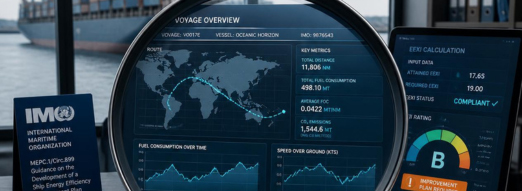
A VRS powered by HFD and AI creates a continuous digital narrative of a ship’s operational reality. Every few seconds, the system collects data from fuel flow meters, engine parameters, shaft power, weather feeds, GPS tracks, tank readings and logbook entries. It automatically reconciles these streams through AI, cross-checks them against regulatory standards, and converts them into verified emissions and performance reports. In practice, this feels like supplementing static noon reports with an always-on operational model of the vessel – ready with up-to-date, accurate, and validated information for compliance scrutiny at any moment.
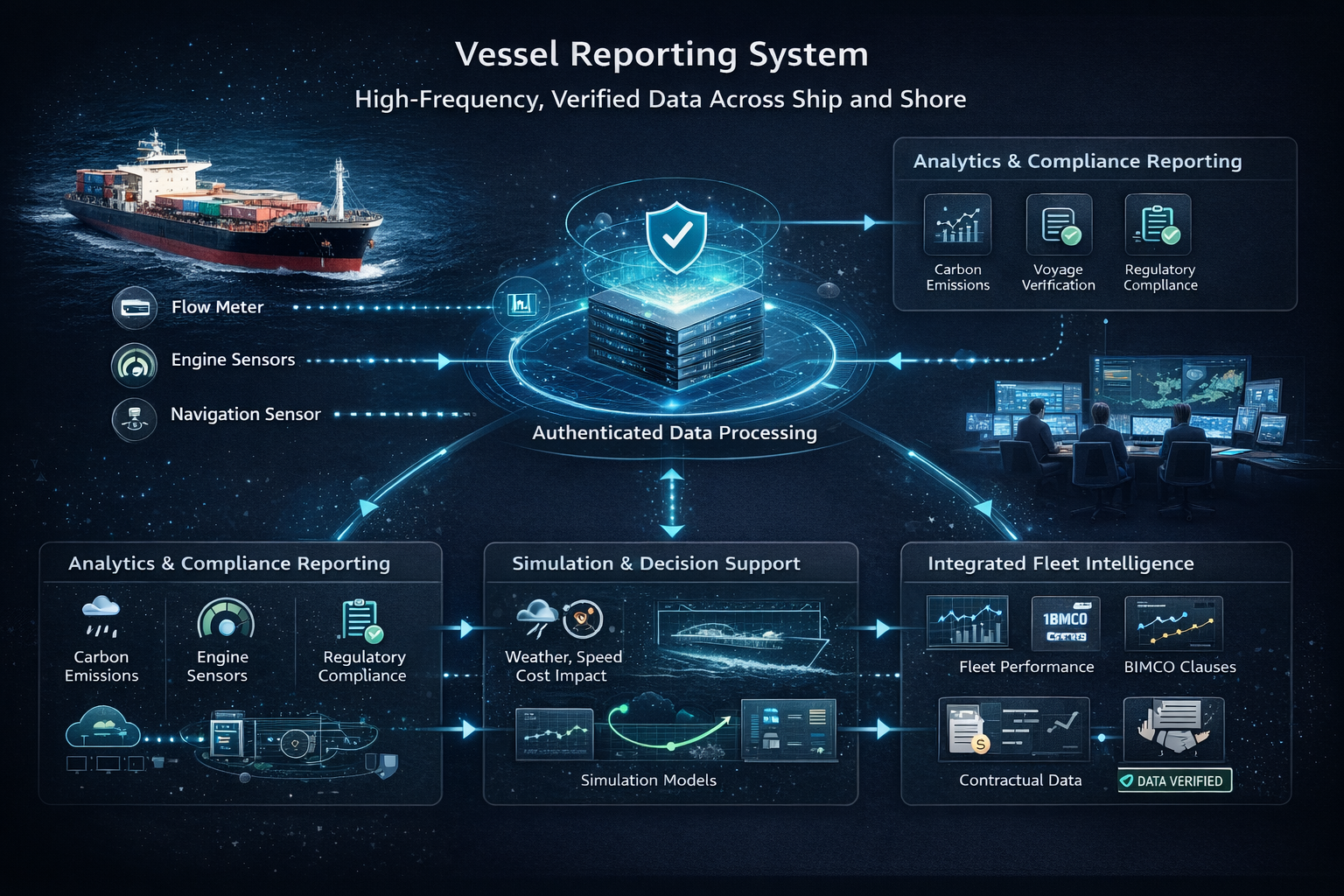
Here's how VRS transforms our world at sea:
What the Change Feels Like on the Bridge
When you’ve spent years reading noon reports and following up for missing log entries, you develop a certain respect for the routine. While the real-time data insights recorded by VRS have not entirely changed this routine, they have improved the level of awareness we now carry as a crew.
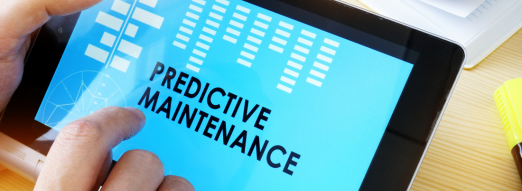
Today, the bridge team, the engine room, and the shore office can all view the same operational realities on their devices. What they view is not a patchwork of information collected from different sources but a live data stream reflecting the ship’s ongoing performance. Officers stay aware of trends developing before operations are disrupted, and engineers stay prepared with predictive maintenance to prevent efficiency drift from harming machinery.
AI-powered and data-centric Vessel Reporting System also refines the tone of decision-making on board. And that ends the arguments or confusions about “which reading was more accurate”. Even the ballast adjustments - once managed largely on the basis of experience, judgement, and a handful of manual calculations - now emerge as precise data patterns that we can act on confidently.
Reporting Built for the Next Decade
2026 is here, and we have seen how fast the regulations, markets, and margins are shifting in the marine sector. That old, slow reporting rhythm won’t support us through the next decade. The ships we sail, the fuel we burn and the emissions we account for are now under a level of scrutiny we haven’t experienced before. We need to have intelligent, tireless systems working alongside us.
Smart Ship© Hub’s VRS is a digitally mature platform that collects, interprets, validates, and places data in the context of a vessel’s commercial and regulatory reality. It has been designed by mariners to reduce pressure on them, eliminate discrepancies that mislead judgment, and give shipowners the clarity they need to stay competitive. In a world of EU ETS, FuelEU Maritime and tightening CII expectations, VRS supports the evolution of seamanship.

















.png)




















Sign up to our monthly newsletter where we will share insights, invites to exclusive webinars and other events.


